

Ending a marriage, even in the best of situations, is stressful. Parties that choose to divorce amicably through an uncontested divorce, still sometimes have contested issues that need legal solutions. However, narcissistic personality can be even more emotionally draining and complicated making an already difficult situation worse. What are you to do if you find yourself in a battle with a narcissist spouse?
What is a narcissist?
Not all difficult or nasty people are narcissists even though they may share common traits. The Mayo Clinic website defines a narcissist personality disorder: “as a mental health condition in which they need and seek too much attention and want people to admire them. They may lack ability to understand or care about the feelings of others. They have self-worth issues and are easily upset by the slightest criticism.”
The website goes on to list symptoms of narcissistic personality:”
- Have an unreasonably high sense of self-importance and require constant, excessive admiration.
- Feel that they deserve privileges and special treatment.
- Expect to be recognized as superior even without achievements..
- Be preoccupied with fantasies about success, power, brilliance, beauty or the perfect mate.
- Believe they are superior to others and can only spend time with or be understood by equally special people.
- Be critical of and look down on people they feel are not important.
- Expect special favors and expect other people to do what they want without questioning them.
- Take advantage of others to get what they want.
- Have an inability or unwillingness to recognize the needs and feelings of others.
- Be envious of others and believe others envy them.
- Behave in an arrogant way, brag a lot and come across as conceited.
- Insist on having the best of everything — for instance, the best car or office.
- At the same time, people with narcissistic personality disorder have trouble handling anything they view as criticism. They can:
- Become impatient or angry when they don’t receive special recognition or treatment.
- Have major problems interacting with others and easily feel slighted.
- React with rage or contempt and try to belittle other people to make themselves appear superior.
- Have difficulty managing their emotions and behavior.
- Experience major problems dealing with stress and adapting to change.
- Withdraw from or avoid situations in which they might fail.
- Feel depressed and moody because they fall short of perfection.
- Have secret feelings of insecurity, shame, humiliation and fear of being exposed as a failure.”
See the Mayo clinic website – mayoclinic.org/diseases-conditions/narcissistic-personality-disorder/symptoms-causes 2025
What to do if You are Divorcing a Narcissist
The following tips are suggestions for not only narcissist personality disorder but any difficult personality:
- Accept that mediation and an uncontested divorce may not be the best choice. The difficult personality or narcissist will try to use manipulation and control to get their way. If the difficult or narcissist personality begins to feel they are not getting their way, they may refuse to continue negotiation, become positional and sabotage the process. They may put the blame on you and flip facts to support their position.
- Minimize communication during the divorce. Communication breakdown is often a reason for the end of a marriage with a narcissist. Communication is essential during a divorce settlement. Hire an experienced divorce attorney and have all communication regarding the divorce go through your attorney.
- Hire an attorney if your spouse has an attorney and you have not engaged counsel. An unrepresented party is always at a disadvantage when one spouse is represented and especially when the spouse is difficult or suffering from narcissist personality.
- Assemble your support system. Friends and family are wonderful, but when divorcing a narcissist, you need extra support. You need extra coping skills to help manage your emotions and make decisions with logic. A narcissist will try to manipulate you, gaslight you and will often act difficult, which results in longer court battles and prolonged litigation. Types of extra help could be found in a good divorce coach, social worker or other mental health professional.
- Document, document, document. A narcissist personality may twist and manipulate facts and lie to their attorney and even the court to get what they want. Document every conversation in writing and have it ready so you can dispute false allegations.
- Gather all financial documents early. Once the divorce is filed you will need to provide to your attorney mandatory discovery in the form of bank accounts, tax returns and retirement statements. In addition to providing your personal information, provide your attorney at minimum what bank accounts, retirement accounts, and other assets your spouse owns. This will allow your attorney to question the opposition if these documents are not produced or do not appear on the financial statement.
- Take photographs of personal items and cash
Take photographs of personal items of value such as artwork, antique cars, collections, jewelry and cash in the event your spouse removes the items without your knowledge.
- Do not tolerate physical or mental abuse. Talk to your attorney about obtaining an abuse prevention order (restraining order), if you are a victim of physical or mental abuse. Talk to your attorney about meeting the standard of fear of imminent bodily harm and/or coercive control.
Upcoming Webinar October 8, 2025 at 12PM, Fleischer Law Solutions will be hosting a webinar on divorcing a narcissist. For more information and to register, please visit
Divorcing a Narcissist: A Guide for High-Conflict Separations
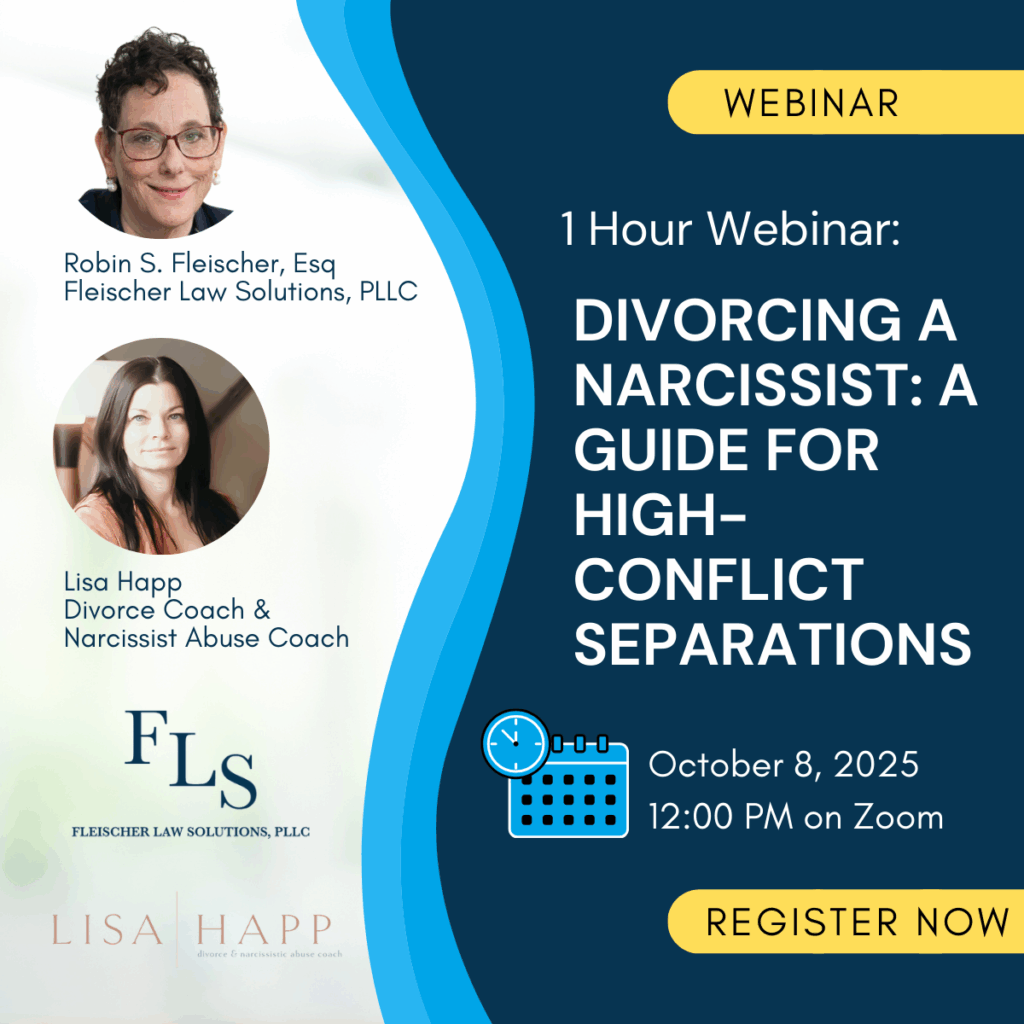
the contact form on this website. Fill out your contact information with your email and write “webinar information”.